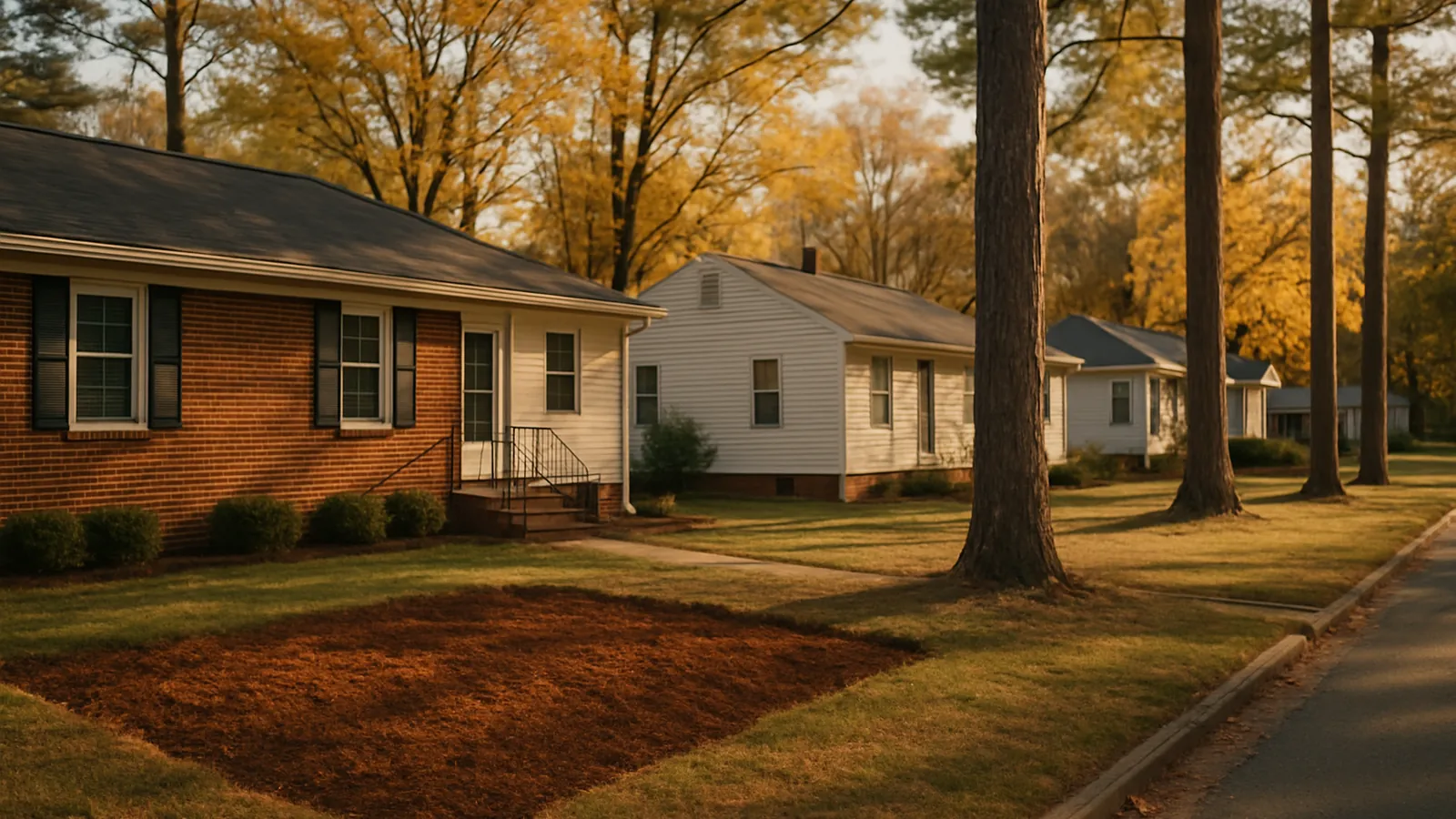
Mold removal in Greensboro costs $500–$6,000 for most residential remediation, with crawl space work $2,000–$6,000 and attic remediation $1,500–$5,000. The Piedmont produces two distinct condensation seasons — summer humidity in crawl spaces, winter moisture in attics — and they need different fixes.
Below: both mechanisms explained, why red clay makes it worse, and what proper remediation involves.
Two seasons, two entirely different problems
This is the thing that separates the Piedmont from the coastal markets an hour and a half southeast, and it's the reason a lot of Triad mold gets misdiagnosed.
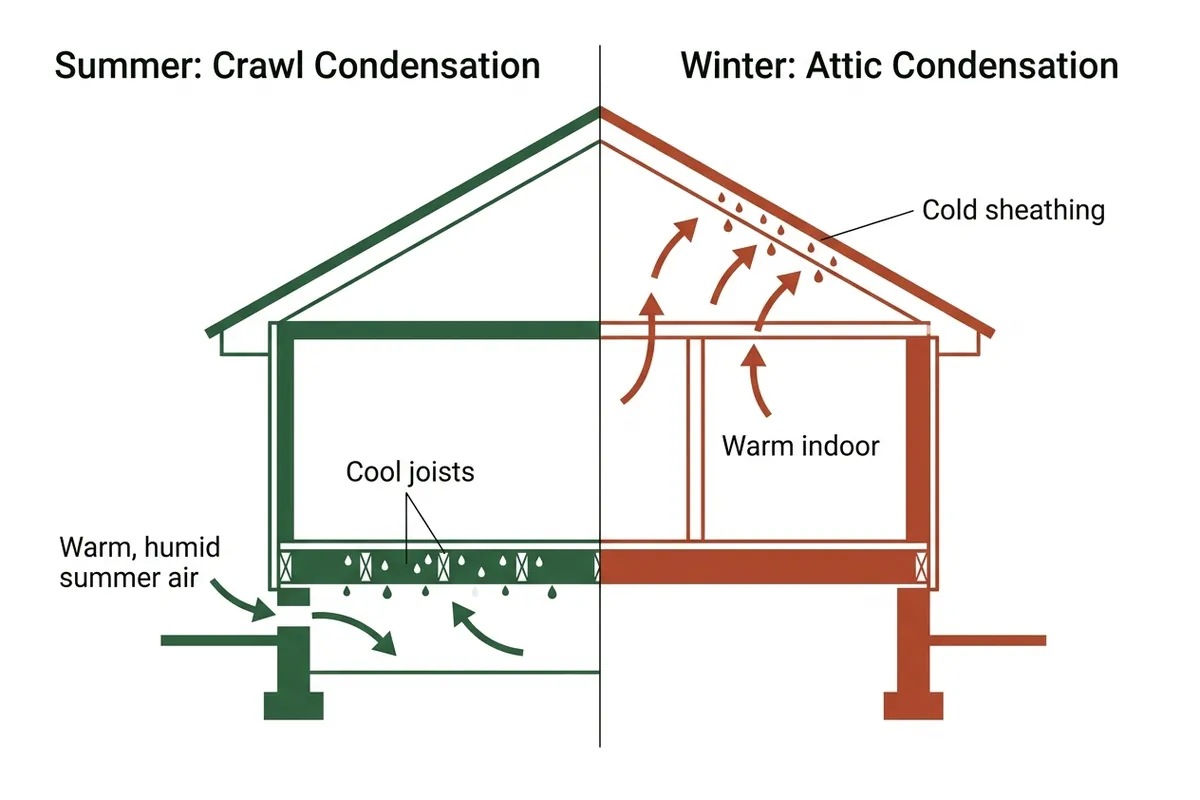
In summer, the problem is under the floor. Humid outdoor air enters a vented crawl space, meets floor joists and ductwork that the air conditioning has cooled from above, and condenses on them. It's the same mechanism the coast has, running from roughly late spring into early fall.
In winter, the problem moves to the attic. Warm, moist indoor air — from showers, cooking, laundry, and simply breathing — rises and leaks upward through the attic hatch, recessed light housings, and duct and wiring penetrations. Up there it meets roof sheathing that's near or below freezing, and condenses on the underside. On the coldest mornings it can form frost, which then melts and soaks the plywood when the sun hits the roof.
Same physics, opposite seasons, opposite ends of the house. A company that only inspects for one of them will miss half of what this market produces — which is why our inspection goes into both the crawl space and the attic, regardless of which one you called about.
What each one looks like
| What you notice | Which mechanism | When it shows | The work |
|---|---|---|---|
| Musty smell near the floor, cupping hardwood, growth on joists | Summer crawl space condensation | Late spring to early fall | Crawl remediation and vapor barrier |
| Dark streaks on attic sheathing, frost on nail tips, damp insulation | Winter attic condensation | Cold months, often noticed in spring | Attic remediation and air sealing |
| Growth on an exterior wall, behind furniture, in a closet | Either — interior humidity or a cold surface | Any season | Containment and HEPA removal |
| Odor with nothing visible anywhere | Undetermined — needs measurement | Any season | Inspection and testing |
| Burst pipe, roof leak, appliance failure | Bulk water on a 24-to-48-hour clock | Winter freezes especially | Extraction and metered drying |
Red clay: why the water doesn't leave
Piedmont red clay is the third factor, and it turns a humidity problem into a water problem. Clay percolates poorly — rain that would soak into sandy coastal soil instead sits, ponding against foundations and running along the surface until it finds a low spot. Frequently that low spot is a crawl space.
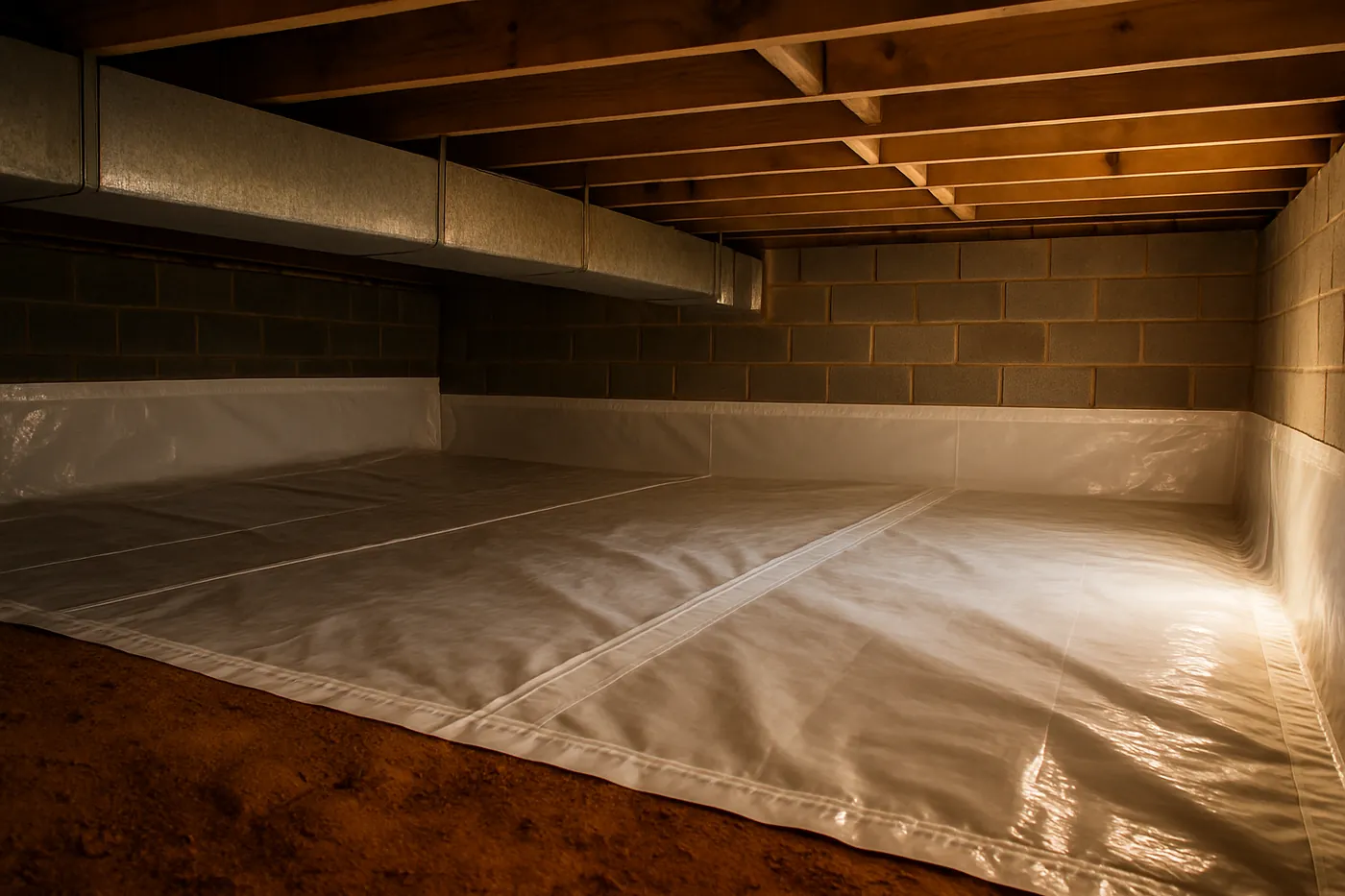
The distinction matters financially. A crawl space dealing only with humid air condensing needs sealing and dehumidification. A crawl space with water arriving — standing water, silt lines on piers, a vapor barrier that has floated — needs drainage and grading corrected first, and installing a liner over it wastes the investment. On red clay, that question comes up far more often than it does on sand.
The good news is that the fix is often cheap. Restoring fall away from the foundation, extending downspouts well clear of the wall, and reopening a swale that filled in over the years does more for a Piedmont crawl space than anything installed under it — and those lines lead our scopes for that reason.
The Triad's mill housing is its own category
Greensboro, High Point, Burlington, and the towns around them grew on textiles and furniture, and that legacy left a large stock of early-twentieth-century mill and mill-village housing. Those homes are typically well built, usually on crawl spaces, and they share a consistent moisture profile: no vapor barrier over bare clay, minimal or no insulation detailing, ventilation designed before central air existed, and an attic that was never air-sealed at the ceiling plane.
None of that is a defect — it's period construction working as built. What those houses usually need is specific and affordable: a proper vapor barrier, air sealing at the ceiling, and drainage correction outside. We'd rather find that than sell a package, and on this housing stock it's frequently the whole answer.
North Carolina doesn't license this trade — so vet harder
Worth knowing before hiring anyone: North Carolina does not issue a mold-specific contractor license. Some states license mold assessors and remediators separately and restrict one firm from performing both roles on a project. Here no such structure exists, which means the consumer protection has to come from your own diligence.
Three questions do most of the work. Verify general contractor licensing. Ask what independent certification the technicians hold, from which body, and whether it's current. And ask to see the moisture readings behind the recommended scope — anyone who can't produce them is quoting, not diagnosing. Ask us the same three. We'd rather you did.
How the inspection works
We go into the crawl space and the attic. Below: moisture content on joists and subfloor, humidity compared against the house, vapor barrier and ground condition, standing water and where it comes from. Above: sheathing condition, insulation moisture, bath fan terminations, and air leakage at the ceiling plane. Then indoors and outside — readings at wall bases, and grading and downspout discharge. You get a written scope naming the moisture source, the work, the price per line, and the timeline. Free, and yours to take anywhere.
Four questions get their own deep pages: which of the Piedmont’s two seasons grew your black mold, why basements here farm mold without flooding, what lives in the AC system and ductwork, and what insurance actually covers.
Mold questions Greensboro homeowners ask
How much does mold removal cost in Greensboro?
Most residential remediation runs $500 to $6,000, with crawl space work $2,000 to $6,000 and encapsulation packages $4,000 to $10,000. Attic remediation typically lands $1,500 to $5,000. What sets your number is how far growth spread and which of the two seasonal mechanisms is driving it. The inspection is free. Our Mold removal cost breakdown for Greensboro shows what drives each figure, line by line.
Why do you talk about two seasons?
Because the Piedmont has two separate condensation problems and the coast only really has one. In summer, humid air condenses on cool crawl space framing. In winter, warm moist indoor air rises into a cold attic and condenses on the sheathing. Different location, different season, same physics — and a company that only checks for one will miss half the market's mold.
Our attic has dark streaks on the plywood. What causes that?
Winter condensation, in most cases. Warm humid air from the living space leaks up through the attic hatch, recessed lights, and duct penetrations, meets sheathing that's near freezing, and condenses on the underside. Repeat through a Piedmont winter and you get the streaking pattern that follows the framing bays.
Does red clay really matter for mold?
It matters a lot. Piedmont clay percolates poorly, so rain doesn't soak away — it sits against foundations and finds its way into crawl spaces. A crawl over red clay is frequently dealing with liquid water arriving rather than just humidity condensing, and those need different fixes in a specific order.
What indoor humidity should I be aiming for?
Under about 60 percent relative humidity in summer keeps growth largely arrested. In winter the target inverts: if indoor humidity runs too high while it's cold outside, you're supplying the attic and cold-wall condensation problem. Around 30 to 40 percent through the cold months is the usual guidance for this climate.
Does North Carolina license mold companies?
No — the state doesn't issue a mold-specific contractor license, which puts more of the vetting on you. Verify general contractor licensing, ask what independent certification the technicians hold and from which body, and ask to see the moisture readings behind the scope. Those three questions do most of the filtering.
Do I need testing before removal?
Often not. EPA guidance is that visible mold with a known water source generally doesn't require testing first, since the remediation is the same regardless of species. Testing earns its cost for odor with no locatable source, a health question needing documentation, a real estate transaction, or verifying a completed job.
Will insurance cover it?
Cause decides it. Sudden accidental water — a burst pipe, which this climate produces every hard freeze — is frequently covered. Gradual humidity, crawl space condensation, and attic condensation are typically excluded because they're considered maintenance. We document cause, timeline, and readings in the format adjusters work from.
Mold removal across the Piedmont Triad
High Point · Winston-Salem · Burlington · Kernersville · Jamestown · Summerfield · Oak Ridge · Gibsonville · Archdale · all service areas
Get a free Greensboro mold inspection
Tell us what you’re seeing — a musty smell near the floor, dark streaks on attic sheathing, staining on a wall, water standing against the foundation — and we’ll schedule an inspection that goes into the crawl space and the attic. We reply the same business day.