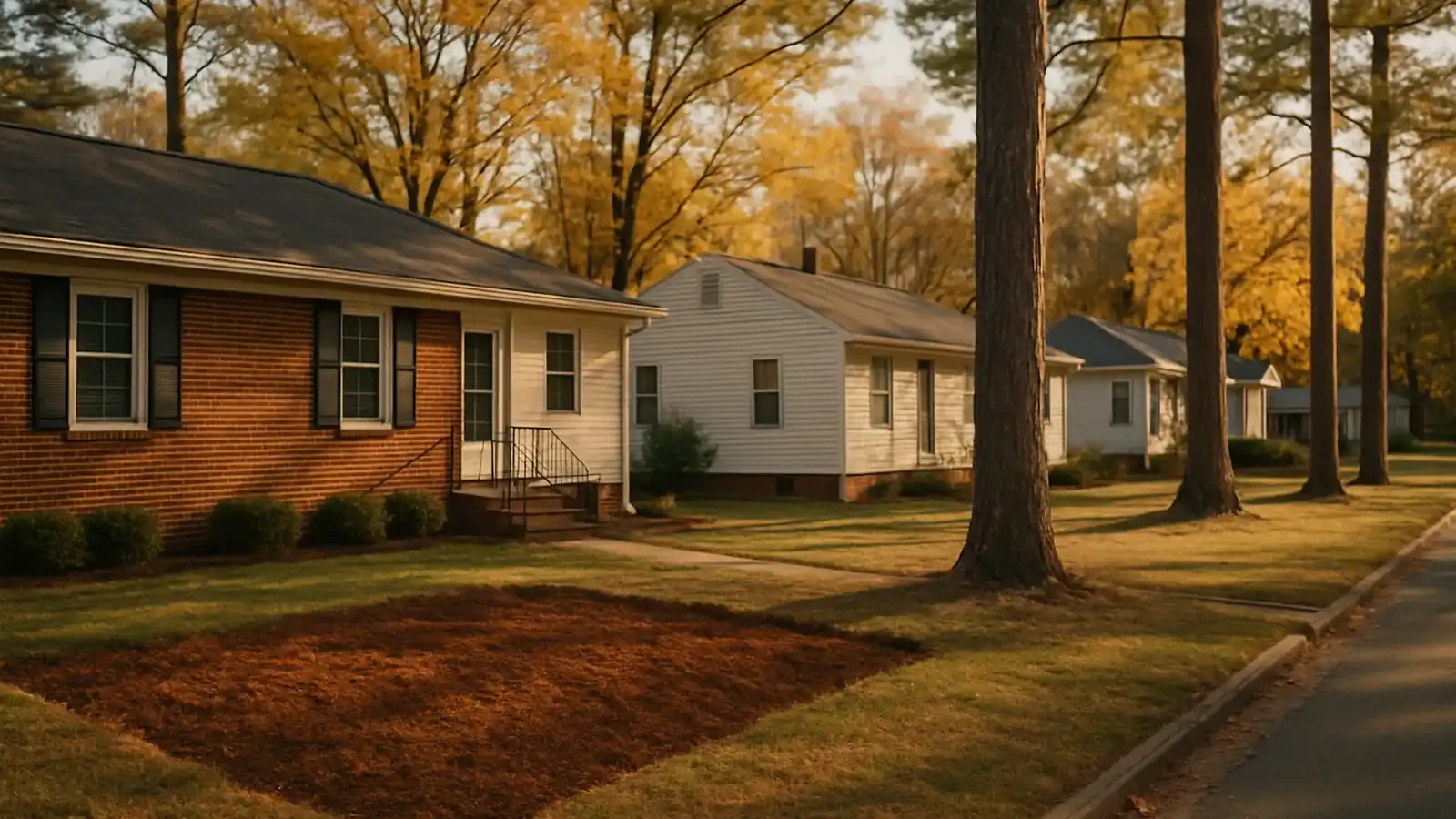
For most Oak Ridge homes mold removal is $500–$6,000, crawl space work $2,000–$6,000 and attic remediation $1,500–$5,000. On rural lots with farmhouses, barns and newer estates side by side, the inspection should say which buildings it covered.
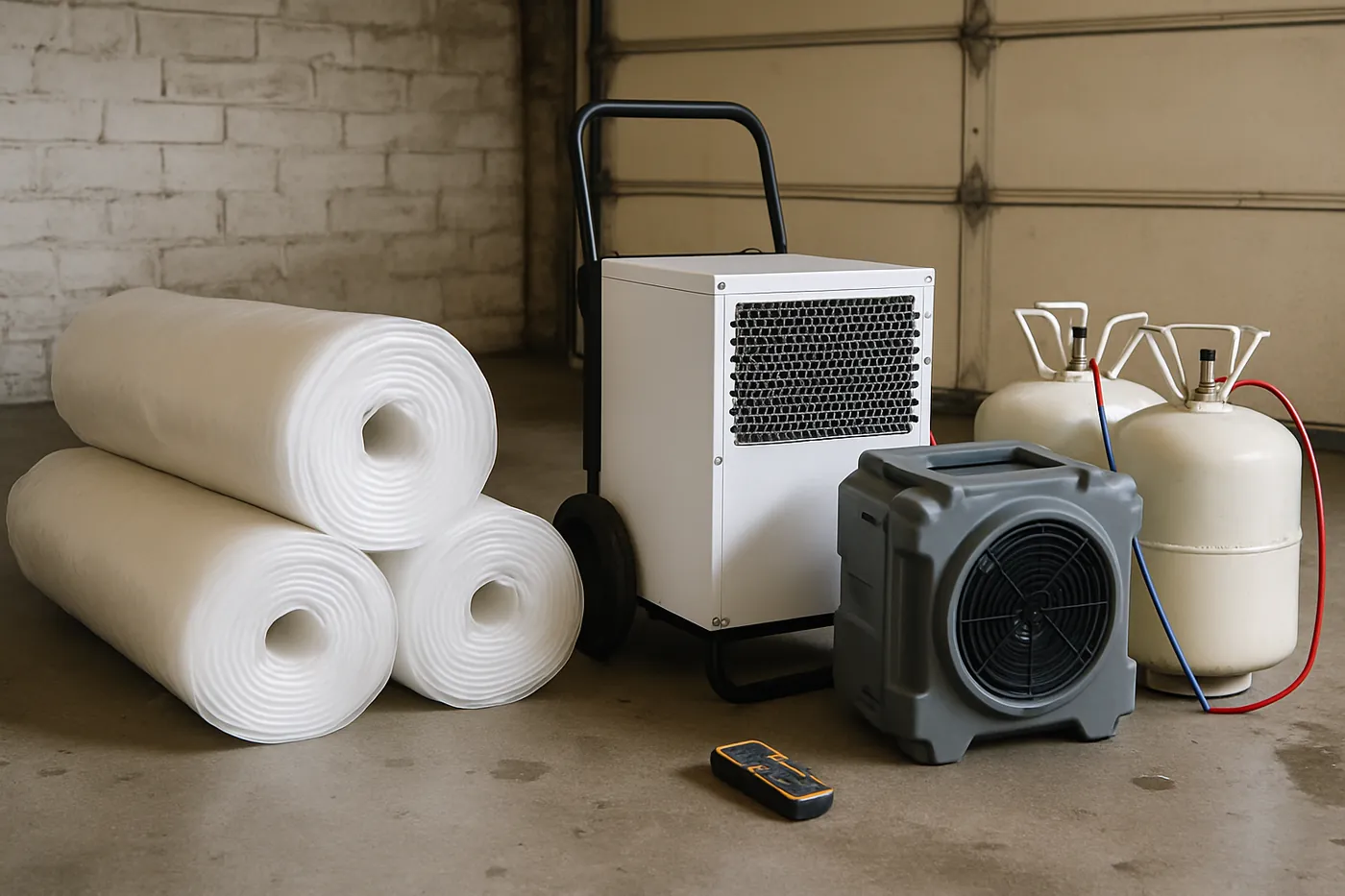
Farmhouses and what they were built to do
Oak Ridge retains a stock of older rural housing: farmhouses built well before central heating and air conditioning, usually on crawl spaces or piers, and typically added onto more than once across their lifetimes. Those additions matter: the joint where two construction eras meet is a frequent water intrusion point, because flashing and envelope details from different decades rarely align.
It shows up as staining on an interior wall with no plumbing above it, which puzzles owners until someone looks at the seam from outside. On an older rural property that's the first place to check when the moisture source isn't obvious.
Barns, shops, and detached structures
Rural properties here commonly include outbuildings that were never meant to be conditioned, and in a Piedmont summer those hold high humidity essentially without interruption. That's fine when they're genuinely detached and used for storage of non-porous things. It becomes a problem when a structure has been partially finished, insulated, or connected to the house: at which point it's a humid volume attached to a conditioned one.
A good inspection covers those connections, and an honest specialist will say plainly when a barn doesn't warrant remediation and simply needs different storage habits.
Clay, distance, and the water path
Large rural lots on red clay route a lot of water. Rain that would soak into sandier soil runs along the surface here, and a long approach, a gravel drive, or an old field ditch can direct substantial volume toward a foundation without anyone noticing until a crawl space shows silt lines. A good inspection here starts outside for that reason, and the correction is frequently grading rather than anything installed under the house.
Asked in Oak Ridge
We have staining on an interior wall with no plumbing above it. What causes that?
On an older rural property, usually the seam where an addition meets the original structure. Flashing and envelope details from different decades rarely align, so that joint is a frequent intrusion point. It's the first place to check when the moisture source isn't obvious from inside.
Our barn is humid. Is that a problem for the house?
Only if they're connected. A genuinely detached outbuilding holding humidity is normal in this climate and usually just needs different storage habits. It becomes a problem where a structure has been partially finished, insulated, or attached to conditioned space, then it's a humid volume feeding a conditioned one.
Water crosses our property before it reaches the house. Can that be fixed?
Usually, and usually with grading rather than anything installed under the house. On red clay water runs along the surface instead of soaking in, so a long approach, a gravel drive, or an old field ditch can direct real volume at a foundation. Trace the path before pricing anything structural.
Is an old farmhouse worth repairing?
Almost certainly. These buildings have already demonstrated durability, and their problems are moisture-and-detailing problems rather than structural ones. A careful specialist probes before condemning material, keeps what's sound, and scopes with restraint on assemblies that were built to breathe.
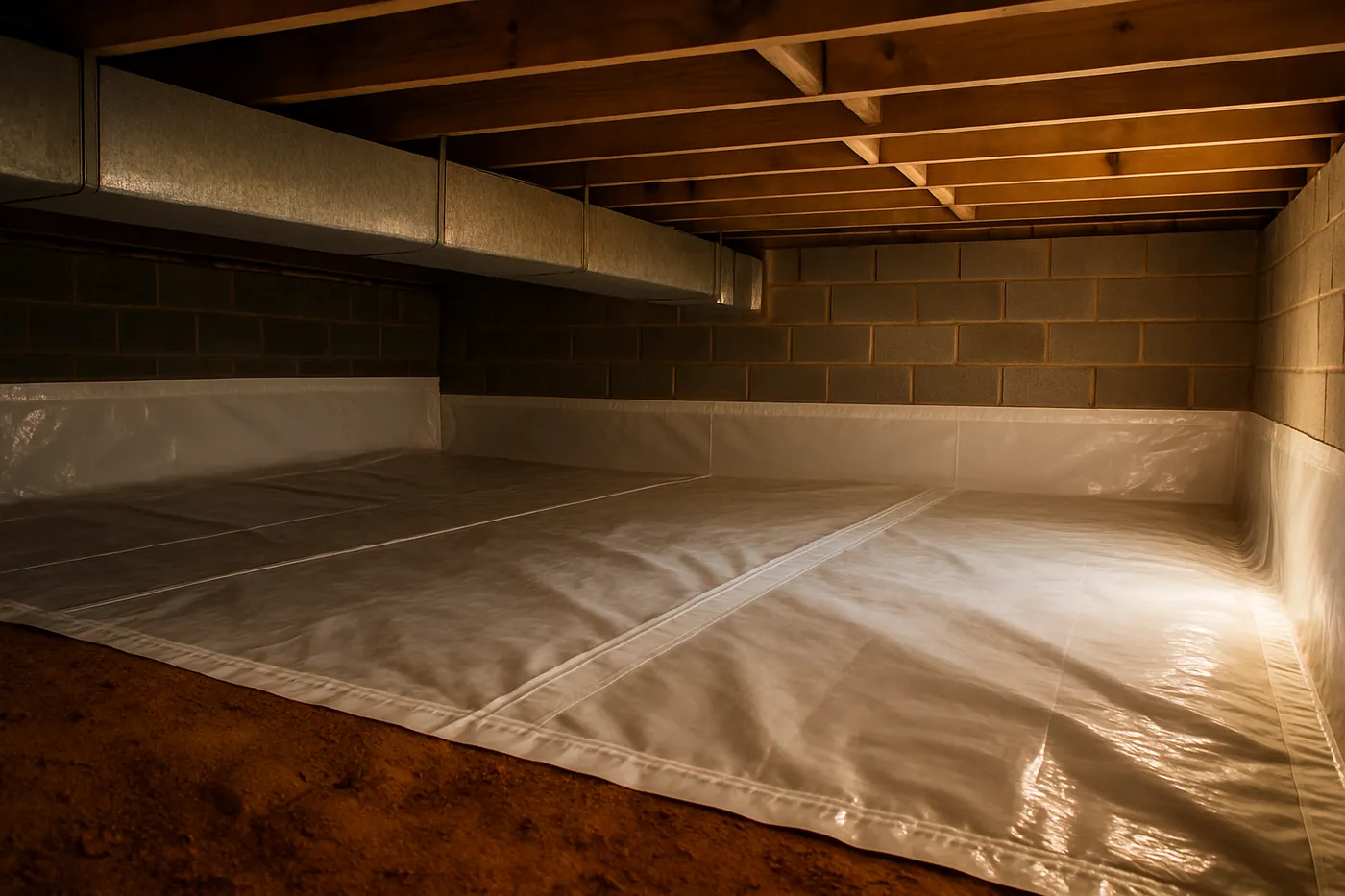
Oak Ridge housing by era
Oak Ridge has roughly 2,700 housing units in the 2020-2024 American Community Survey, with a median year built of 1997 and owner occupancy above 92%. The 2000s and 1990s together hold about half the stock, and roughly 9% predate 1970. That older group includes the farmhouses described above, which sit beside large newer homes whose problems are mostly in the attic and the ductwork.
Reedy Fork and the water path
USGS operates a stream gauge on Reedy Fork near Oak Ridge. On large rural lots the water path from roof to stream can be long, and a low spot where water lingers near the foundation is often the first thing to fix before remediation.
Town clearance, then county permits
Oak Ridge requires a Development Clearance Permit from the town before a building permit is issued for new construction or an addition, and Guilford County Inspections issues the building, electrical, plumbing and mechanical permits. For a remediation that only replaces drywall and insulation, ask the county whether a permit applies; once framing or wiring is involved, it usually does.
Get a Greensboro mold inspection
Tell us what you’re seeing: a musty smell near the floor, dark streaks on attic sheathing, staining on a wall, water standing against the foundation, and we'll pass your request to one independent local specialist, who can set up an inspection. A local specialist who works in Greensboro will call you back.