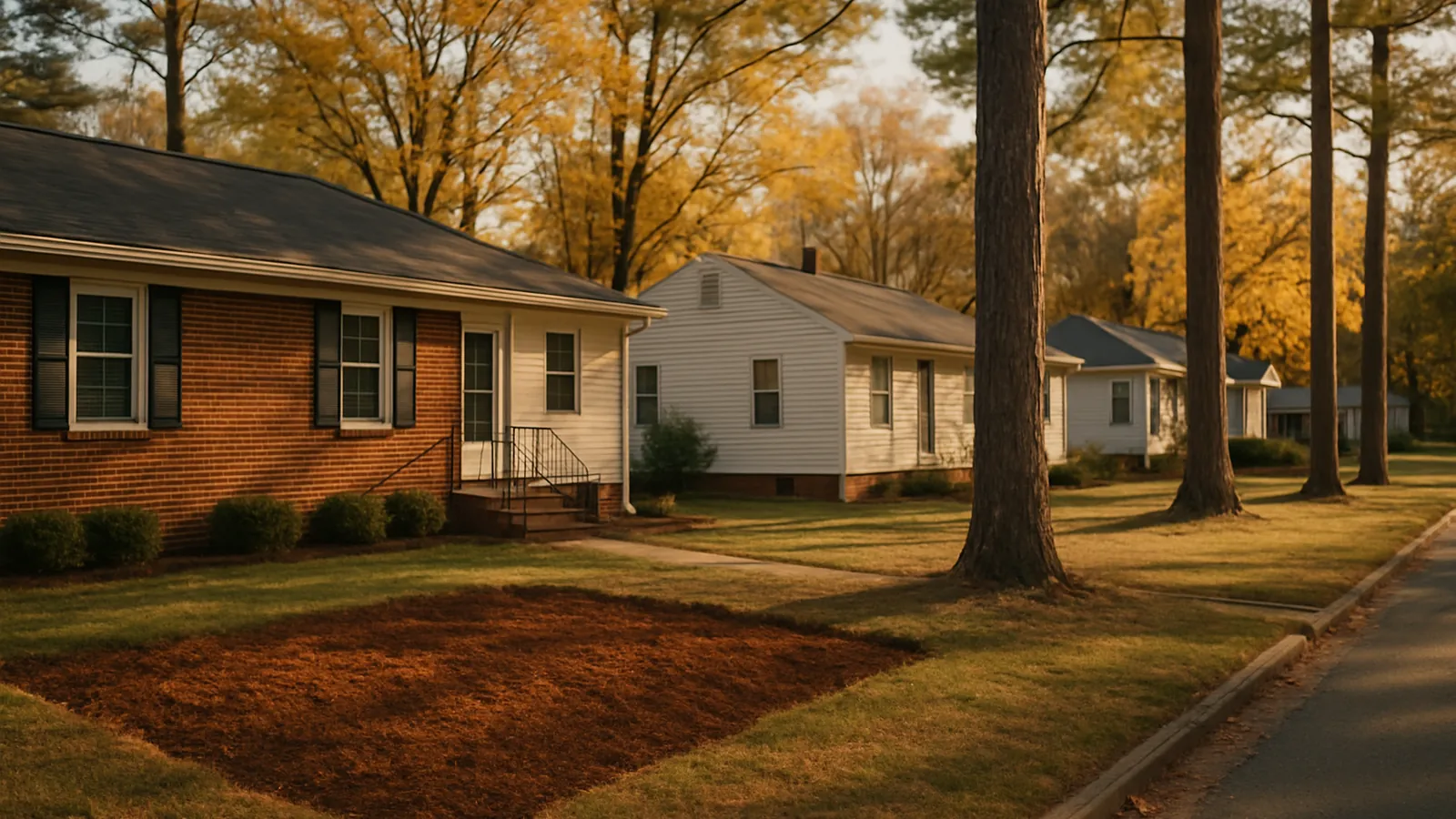
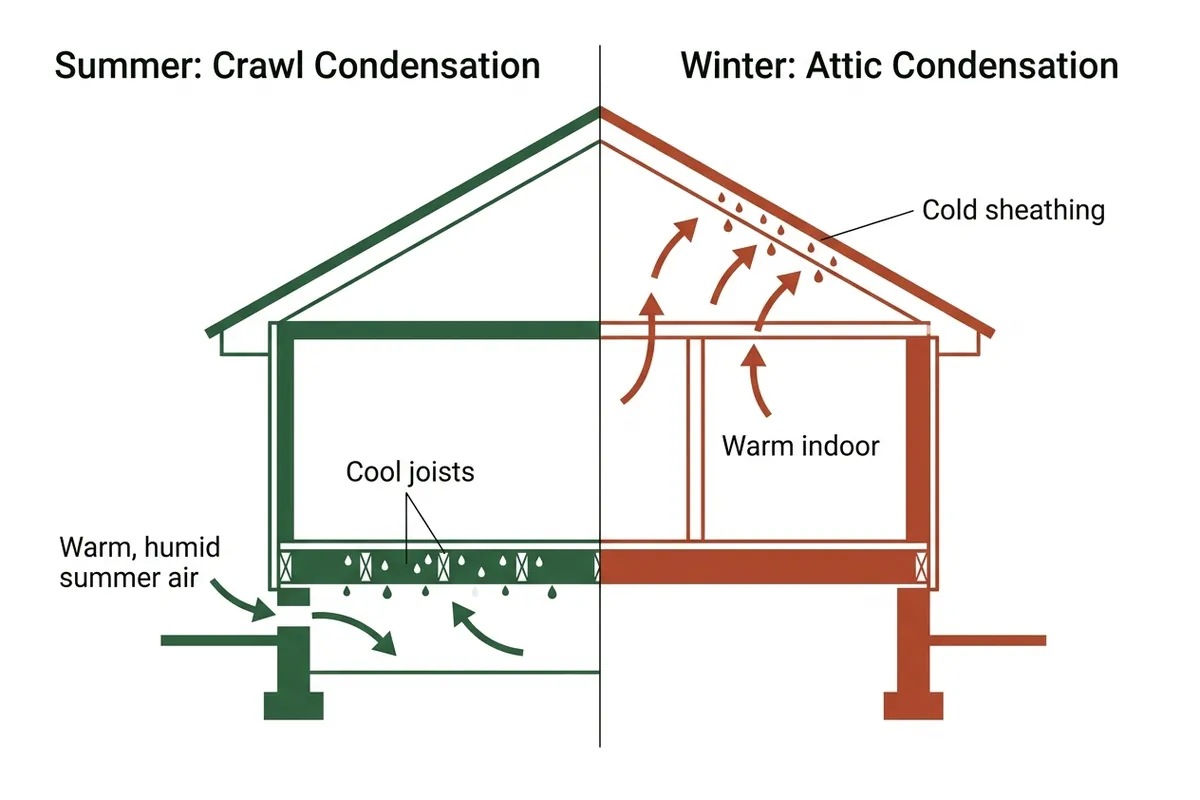
Mold removal in Greensboro costs $500–$6,000 for most remediation in the living space, $2,000–$6,000 for crawl space work, $4,000–$10,000 with full encapsulation, and $1,500–$5,000 for attic remediation. Which applies depends on which of the Piedmont's two condensation seasons is driving it.
Below: what each range buys, why the season changes the answer, and how to compare two estimates that describe different ends of your house.
Greensboro mold prices by job
| Job | Typical range | What it covers |
|---|---|---|
| Crawl space remediation | $2,000–$6,000 | HEPA cleaning of joists and subfloor, removal of contaminated insulation, containment at the access |
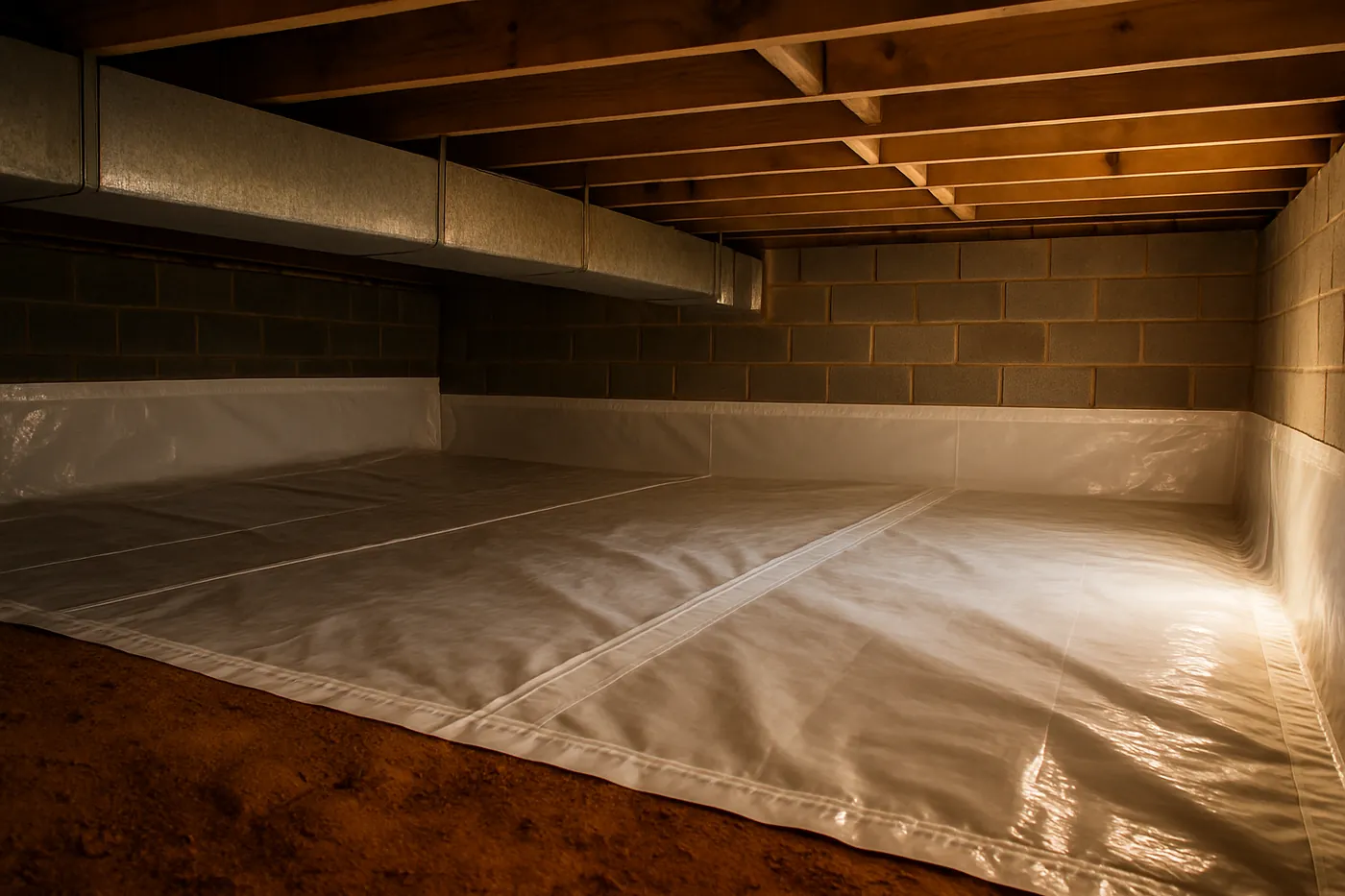
| Encapsulation package | $4,000–$10,000 | The above plus heavy vapor barrier, sealed vents, air-sealed rim joists, and a dedicated dehumidifier |
| Crawl space drainage | $1,500–$6,000 | Grading correction, downspout extension, sump or perimeter drain — priced separately because red clay makes it necessary more often here |
| Attic remediation | $1,500–$5,000 | HEPA cleaning of sheathing, insulation removal where contaminated, ceiling-plane air sealing, bath fan corrections |
| Living space remediation | $500–$6,000 | Containment with negative air, physical removal of affected material, HEPA filtration, drying to a measured target |
| Inspection and testing | Free–$900 | Our inspection covering crawl space and attic is free; laboratory testing $300–$900 when it changes the plan |
| Water damage restoration | $1,000–$8,000 | Extraction, structural and crawl space drying, daily readings against a dry standard, documentation |
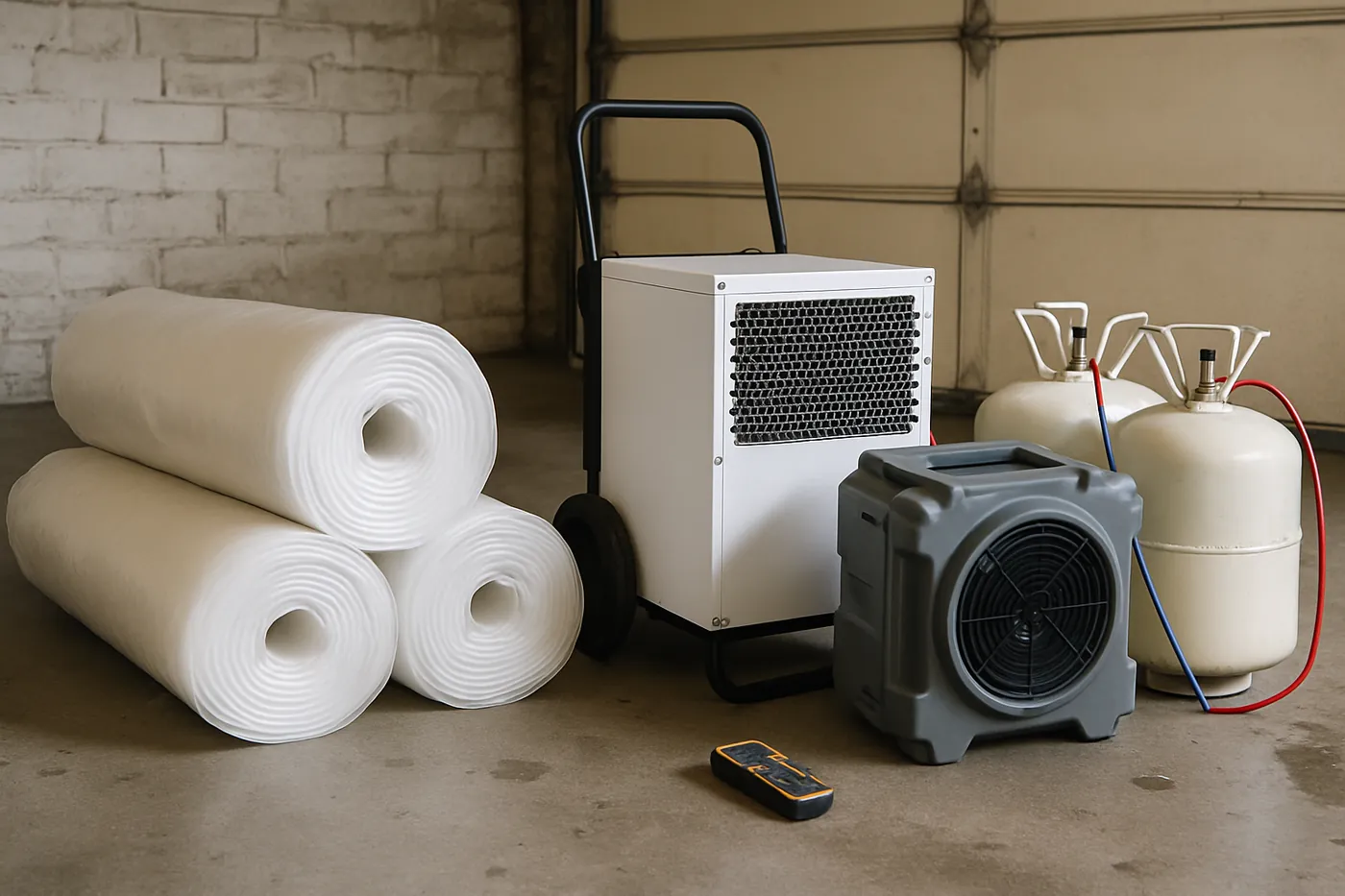
The four factors that move a Greensboro estimate
1. Which season, and therefore which end. The first question, and the one that decides everything else. Summer mechanisms live below the floor; winter mechanisms live above the ceiling. A house can have both, and plenty here do.
2. Whether water is arriving or only condensing. On red clay this comes up constantly. Standing water, silt lines, and a floated vapor barrier mean drainage and grading come first, and a liner installed over that wastes the investment.
3. Material removal. Contaminated fiberglass batts, damaged subfloor, and affected drywall all add cost. It's why calling at the smell stage costs less than calling once floors are cupping or sheathing is streaked.
4. Access. Crawl height, hatch size, obstructions, and attic accessibility genuinely change labor hours. A 24-inch crawl with a small hatch or a cut-up attic with several disconnected pockets is slow work, and an honest scope says so up front.
Comparing estimates without guessing
- Ask what each bidder found in the attic AND in the crawl space, with readings from both. A company that inspected one end can only quote one end.
- Ask whether water is arriving or condensing. Different problems, different price tags, and on clay the answer isn't obvious from the driveway.
- Ask for the crawl space lines separately — remediation, vapor barrier and encapsulation, drainage. A single number hides which you're buying.
- Ask whether the ceiling-plane air sealing is included on any attic quote. Cleaning sheathing without sealing the ceiling is cleanup, not a fix.
- Be skeptical of anyone recommending more crawl space vents — venting supplies summer moisture here rather than removing it.
- Verify licensing yourself. North Carolina issues no mold-specific license, so check general contractor licensing and ask what independent certification the technicians hold.
The question that saves the most money here
Ask every bidder: "which season is this, and how do you know?" A good answer names the mechanism, the location, and the readings behind it — summer humidity condensing on crawl framing, or winter indoor moisture condensing on cold sheathing, with moisture content numbers from the affected surface.
A vague answer, or one that jumps to a package price without having been in both spaces, tells you the diagnosis wasn't done. In a market with two mechanisms, fixing the wrong one costs full price and changes nothing.
When the honest answer is a few hundred dollars
A real share of inspections here end without a remediation recommendation. A crawl with dry clay and humidity only modestly above the house may need a proper vapor barrier and corrected downspouts. An attic with light staining and an unsealed hatch may need a weekend of air sealing and a bath fan routed properly. Those visits get a written report at that recommendation and nothing more, because a company that never declines the larger sale isn't measuring anything.
Figures reviewed July 2026. Sources you can check: The climate and remediation claims on this page are checkable against primary sources: see NOAA U.S. Climate Normals for Greensboro rainfall and temperature, EPA Mold Remediation guidance for remediation practice and the position on testing, and the NC Licensing Board for General Contractors to verify contractor licensing. Cost ranges reference regional contractor pricing data.
Cost questions, straight answers
What's the average mold removal cost in Greensboro?
There isn't an average worth quoting. In the living space, a single wall or closet often lands at $500 to $1,500 and a room with material removal runs $2,000 to $6,000. Crawl space remediation runs $2,000 to $6,000, encapsulation packages $4,000 to $10,000, and attic remediation $1,500 to $5,000. Which one you need depends on the season driving it.
Why does the season matter to the price?
Because it tells you which end of the house to fix. A summer problem lives in the crawl space and responds to drainage, a vapor barrier, and sometimes a dehumidifier. A winter problem lives in the attic and responds to air sealing the ceiling plane. Fixing the wrong end costs full price and changes nothing.
Why do two Greensboro estimates differ so much?
Usually because one checked both ends of the house and the other checked one. A company that only inspects the crawl space will quote crawl space work whether or not that's your season. Ask each bidder what they found in the attic and what they found underneath, with readings from both.
Is a full encapsulation package always necessary?
A full encapsulation package isn't always necessary, and on Piedmont housing it frequently isn't. Plenty of crawl spaces here need a proper vapor barrier plus corrected downspouts and grading — a fraction of a full package. Encapsulation with a dehumidifier earns its price where humidity stays high after sealing, and the readings say which situation you're in.
Will insurance cover any of this?
Cause decides. A burst pipe is sudden accidental water and is frequently covered, which matters here because every hard freeze produces them. Gradual humidity, crawl space condensation, and attic condensation are typically excluded as maintenance — which unfortunately describes most Piedmont mold.
Do you charge for the inspection?
We don't charge for the inspection. Crawl space and attic entry, moisture readings at named locations in both, humidity comparison, exterior water path, photographs, and a written scope with fixed line prices are free — including the outcome where the recommendation is a vapor barrier and better downspouts and nothing else.
Get a free Greensboro mold inspection
Tell us what you’re seeing — a musty smell near the floor, dark streaks on attic sheathing, staining on a wall, water standing against the foundation — and we’ll schedule an inspection that goes into the crawl space and the attic. We reply the same business day.