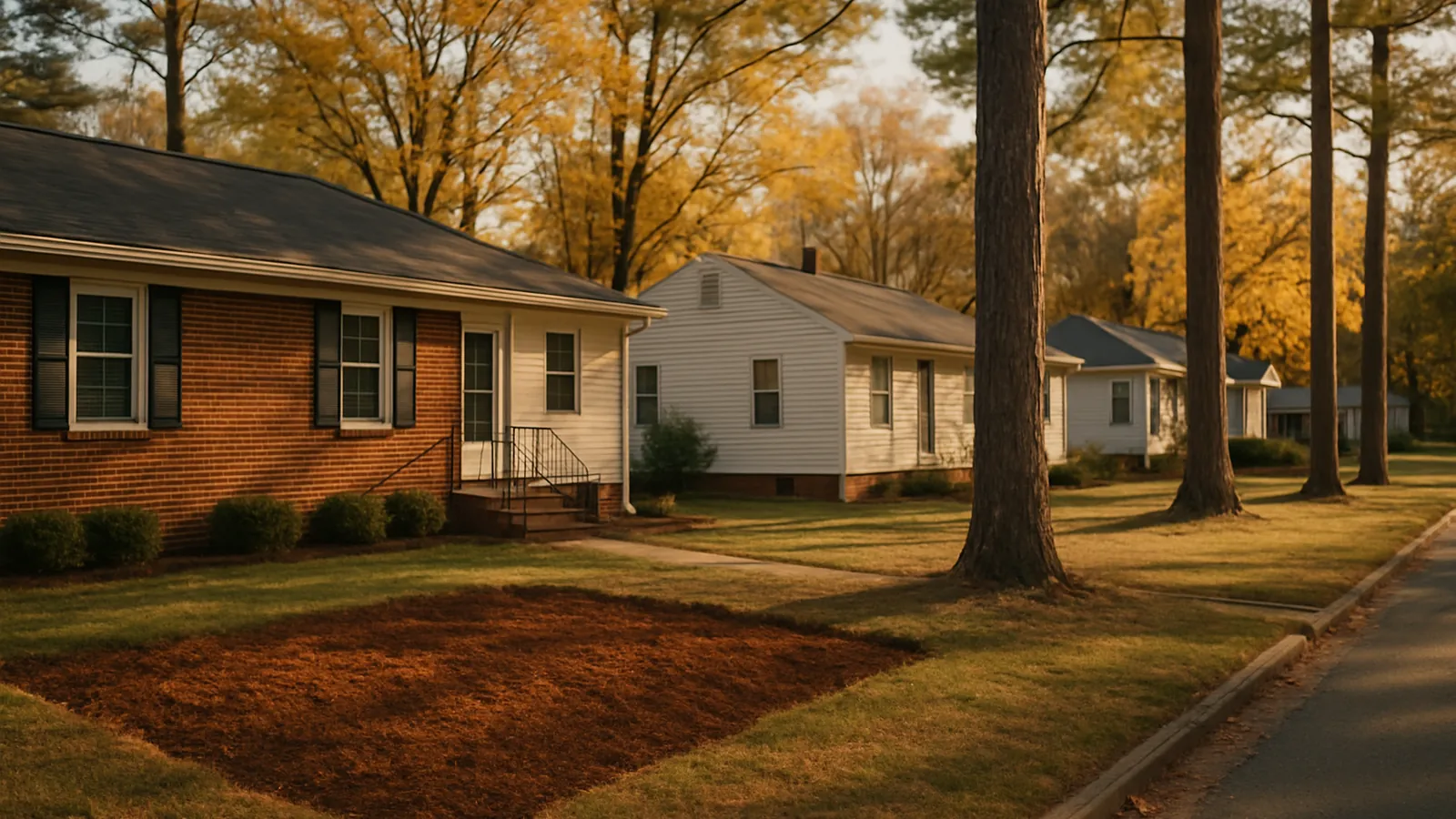
Water damage restoration in Greensboro runs $1,000–$8,000 for most homes, depending on volume, spread, and material removal. Mold can begin establishing on wet materials within 24 to 48 hours — and in this climate the most common cause is a pipe that froze and broke in an unconditioned space.
Here's what metered drying involves, and why frozen pipes are the local signature.
The frozen pipe problem is a Piedmont specialty
Coastal markets rarely see it. Northern markets build against it. The Piedmont gets hard freezes several times most winters in a housing stock that wasn't consistently detailed for them, and the result is predictable: pipes in unconditioned crawl spaces, exterior walls, and unheated garages freeze, expand, and split.
The worst outcomes come from timing rather than volume. A supply line that breaks while a house is occupied gets shut off in minutes. One that breaks in a vacant property, a rental between tenants, or a house whose owners are away for the holidays can run for days — and by the time anyone arrives, it isn't a plumbing problem anymore.
Prevention is genuinely cheap: insulate crawl space supply lines, seal the crawl vents through the cold months, keep the space above freezing, and never let an unoccupied house go unheated in January.
The drying step is where mold jobs are prevented or created
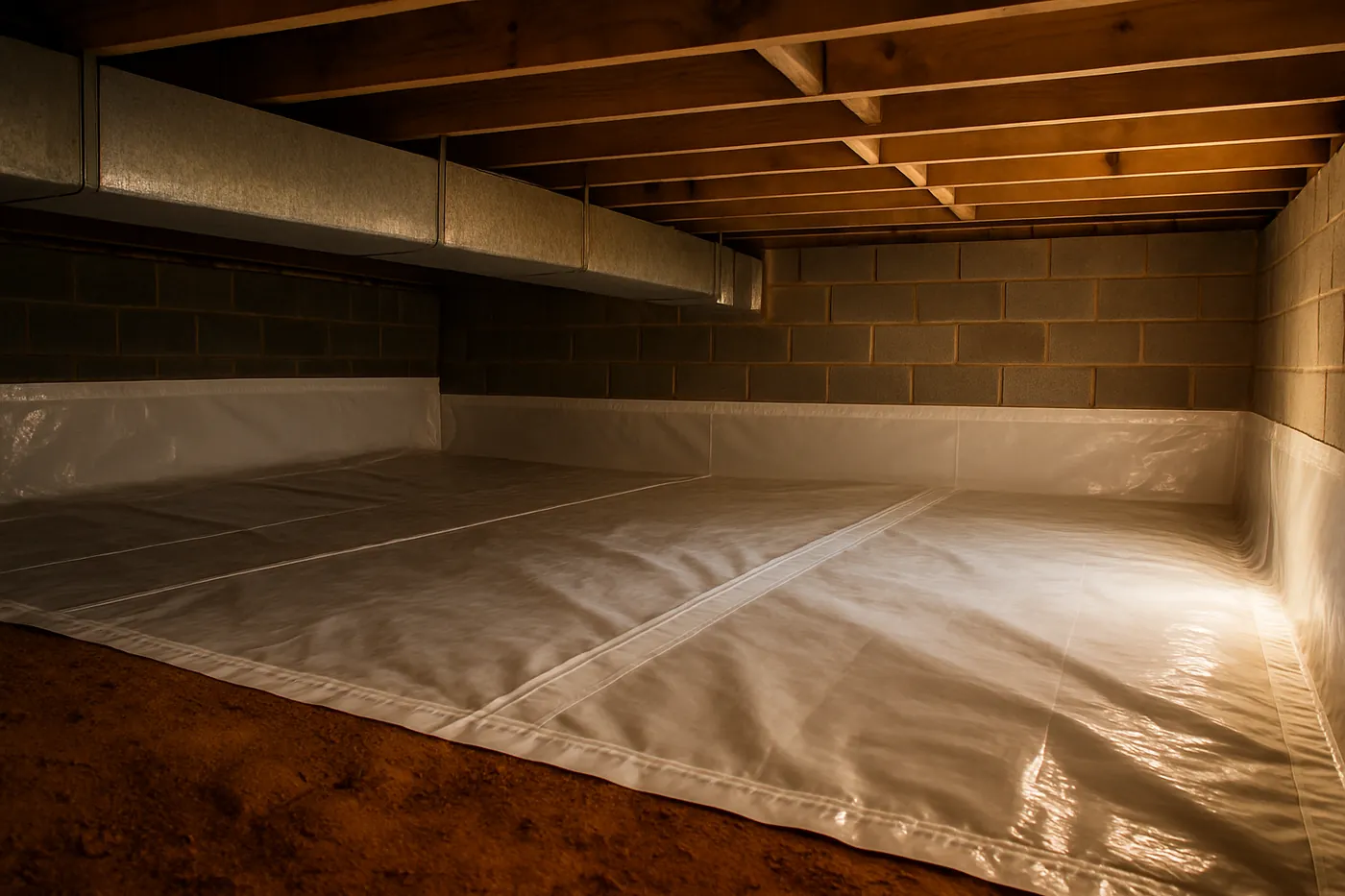
Extraction is visible and satisfying — water gone, floor looks fine. The moisture that matters is what's still inside framing, subfloor, and wall cavities, and it's invisible.
Drying is finished when meter readings on affected materials match a dry standard taken from unaffected material in the same house. Not when the fans have run three days, not when it looks dry, and not when the equipment is needed elsewhere. That's precisely where the shortcut gets taken, and the consequence shows up months later as a smell nobody can locate.
What restoration includes
- Extraction — standing water first, with equipment sized to the volume
- Category assessment — clean, gray, or contaminated, because it decides what can be saved
- Material triage by meter readings rather than appearance
- Structural drying — air movers and commercial dehumidifiers placed for the actual layout
- Cavity drying — wall cavities, under cabinets, and beneath flooring, where household equipment can't reach
- Crawl space drying where water reached it, which on a raised house it usually did
- Daily monitoring against the dry standard, with the log handed over at completion
- Documentation — photographs, readings, cause, and timeline for the claim
The insurance distinction worth knowing
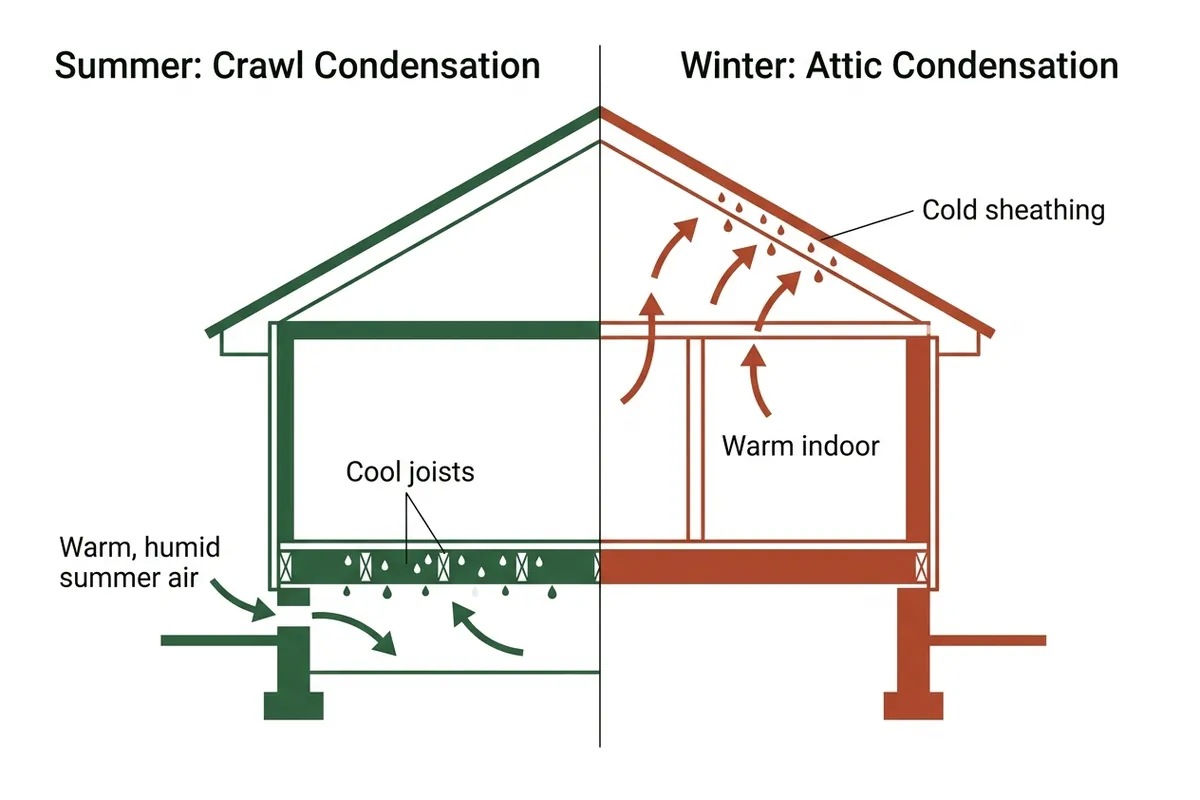
A burst pipe is sudden accidental water, which is one of the more commonly covered categories — unlike the gradual humidity and condensation problems that drive most Piedmont mold and are typically excluded as maintenance. That makes documentation especially valuable here: cause, timeline, and readings, recorded from day one.
One caveat we'd rather raise than have you discover: coverage can be affected where a property was left unheated. If you own a vacant or seasonal property in this market, that is worth reading in your own policy before a January freeze rather than after one.
How fast does this have to happen?
Faster than most people are told. Mould needs moisture, a food source and time, and the only one of those a homeowner controls after a leak is time — which is why the first day matters more than the rest of the week.
| Elapsed time | What is happening in the materials | What it costs you |
|---|---|---|
| First 24 hours | Water spreading; nothing growing yet | Drying only — the cheapest this will ever be |
| 24 to 48 hours | Growth becoming possible on wet paper and insulation | Drying plus removal of what is already saturated |
| Two days to a week | Established growth in porous materials | Remediation, containment, and rebuilding what comes out |
| Longer, or hidden | Growth behind finishes, into framing cavities | Investigation before anyone can price the actual work |
Piedmont red clay keeps the ground around a foundation wet long after the rain stops, so a basement or crawl space loss here often stays damp well past the point a drier lot would have released it.
Water damage questions, straight answers
How fast do I need to act?
Same day. The standard guideline is that mold can begin establishing on wet materials within 24 to 48 hours. Extraction and drying started immediately is the difference between a restoration bill and a remediation bill, and in an unheated space through a Piedmont winter, water also freezes and thaws while it sits.
What does water damage restoration cost?
Most residential jobs run $1,000 to $8,000, driven by volume, spread, and how much material must come out. A clean supply-line break caught within hours is the low end. Water that ran for days while a house was empty, which is the classic frozen-pipe scenario, is the high end.
Are burst pipes really that common here?
Every hard freeze produces them, and the pattern is consistent: pipes in unconditioned crawl spaces, exterior walls, and unheated garages. The worst cases are second homes and vacant properties where a line breaks and runs for days before anyone notices. Insulating crawl space pipes and keeping the space above freezing is cheap prevention.
Does insurance cover a burst pipe?
Sudden accidental water from a burst pipe is one of the more commonly covered scenarios, unlike gradual humidity or condensation, which are typically excluded as maintenance. Coverage can be affected if a property was left unheated. We document cause, timeline, and daily readings in the format adjusters expect.
How do you know when it's dry?
Meters, not calendars. We take readings on affected materials at the start and track them daily against a dry standard measured from unaffected material in the same house. Equipment comes out when the readings meet it, and you get the log. A crew pulling fans on a fixed schedule is guessing.
Get a free Greensboro mold inspection
Tell us what you’re seeing — a musty smell near the floor, dark streaks on attic sheathing, staining on a wall, water standing against the foundation — and we’ll schedule an inspection that goes into the crawl space and the attic. We reply the same business day.