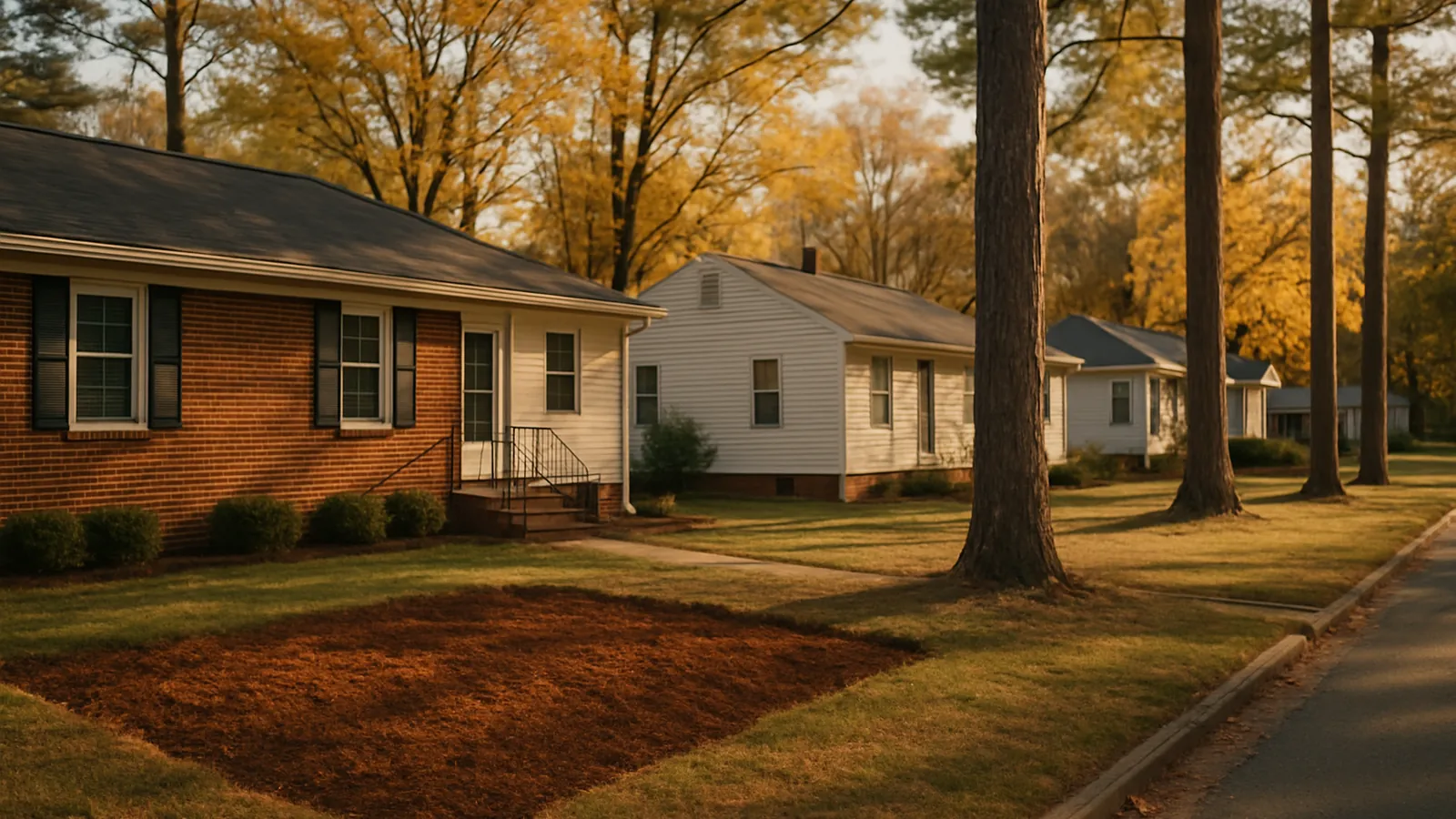
Mold inspection in Greensboro is free with us and includes both crawl space and attic entry, moisture content readings in each, humidity comparison, and photographs. Laboratory testing runs $300–$900 when warranted — and per EPA guidance, visible mold with a known water source generally doesn't need testing first.
Here's what gets measured at both ends, and how to vet a company in a state with no mold license.
Both ends, every time
An inspection here that checks one end of the house is checking one season. Plenty of Triad homes have summer condensation in the crawl space and winter condensation in the attic, and homeowners typically know about whichever one they happened to look at.
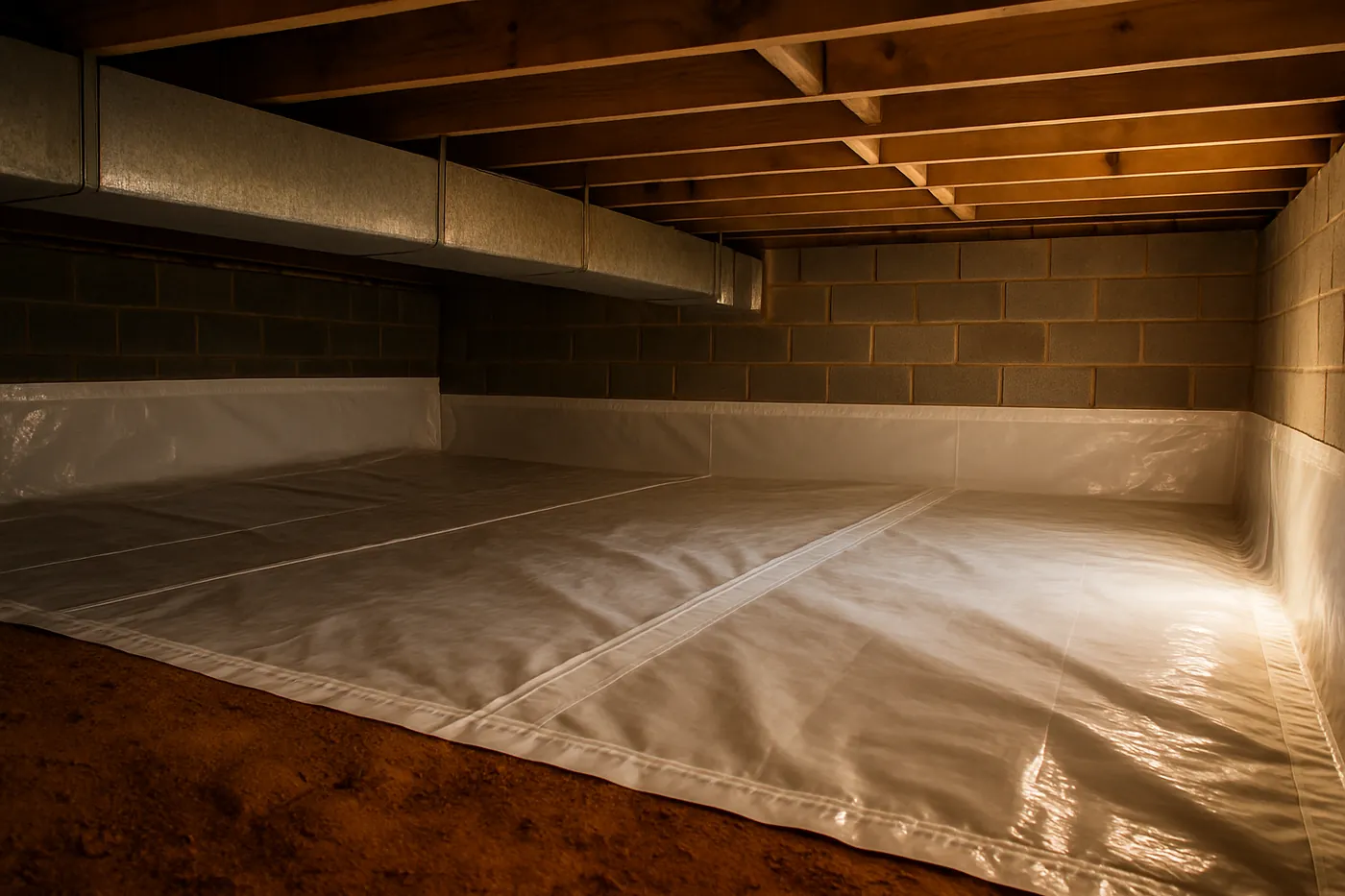
Below, we record moisture content on joists and subfloor at named locations, relative humidity in the crawl compared against inside the house, vapor barrier condition and coverage, evidence of water arriving versus condensing — standing water, silt lines, a floated liner — and duct and insulation condition.
Above, we record sheathing condition and staining pattern, moisture content of the sheathing where accessible, insulation moisture, bath fan and dryer terminations, soffit intake whether blocked or clear, and visible air leakage points at the ceiling plane — the hatch, recessed lights, and penetrations.
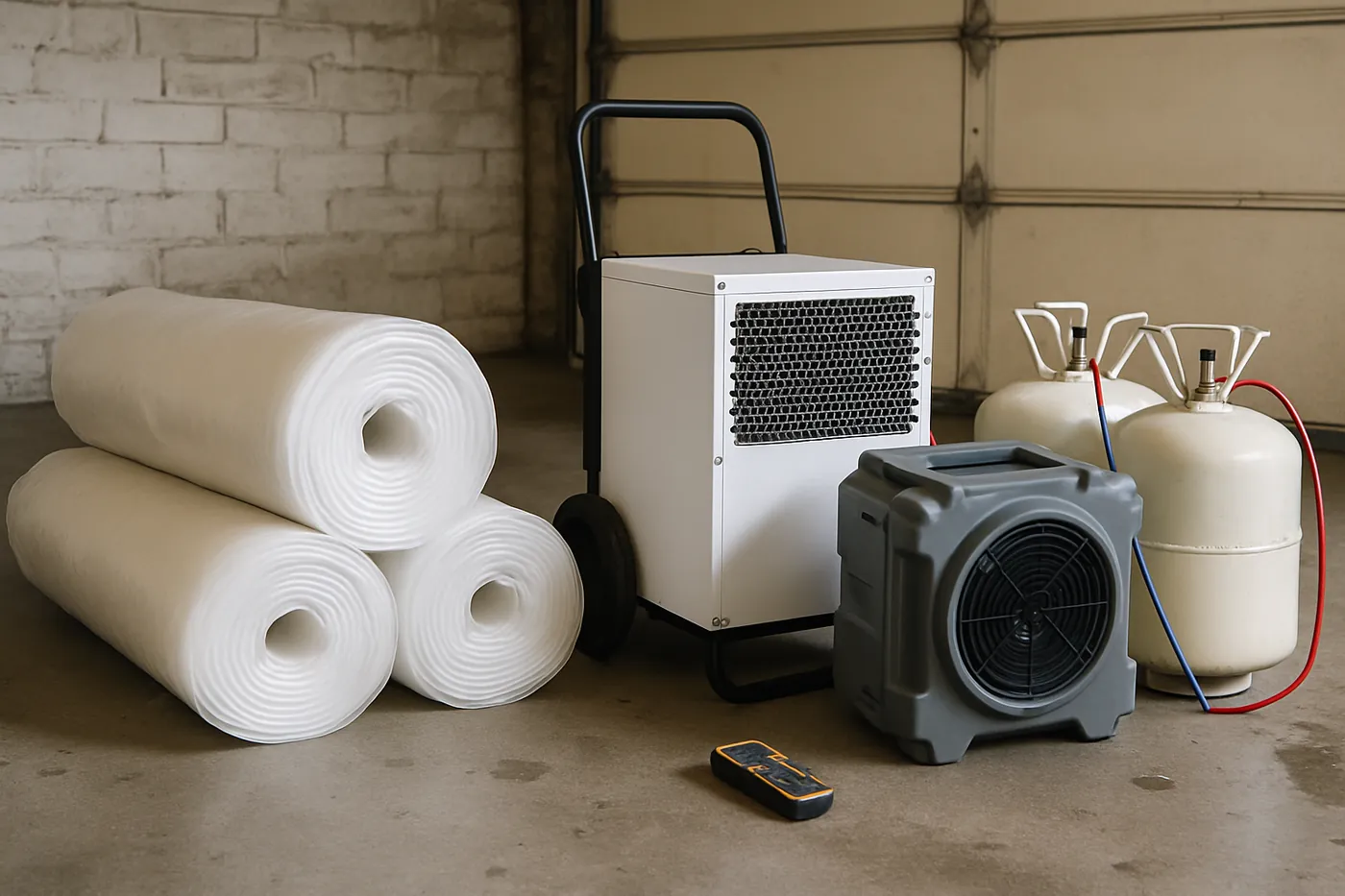
And the parts in between
- Moisture readings at wall bases and any suspect surface, recorded by location
- Indoor temperature and relative humidity, read against the season — the summer target and the winter target are different numbers
- Cold-surface check on exterior walls behind furniture and in closets, where winter condensation shows up in the living space
- Exterior walk — grading, downspout discharge, and where red clay is sending surface water
- Thermal imaging and a borescope where a cavity needs assessment without demolition
When testing is worth it — and when it isn't
The honest version: if you can see mold and know where the water came from, a lab result usually doesn't change what happens next. The remediation is identical regardless of the species named, and EPA guidance takes that position. A company insisting on testing every visible patch is billing for reassurance.
Four situations justify it. Odor with no locatable source after meters have been run at both ends. A health question where documentation is wanted. A real estate transaction. And post-remediation verification, the one case where testing is unambiguously worth its price.
No state license means you do the vetting
North Carolina does not issue a mold-specific contractor license. Some states license mold assessors and remediators separately and restrict one firm from performing both roles on a project, precisely so the company sizing a job isn't the company paid by its size. North Carolina has no equivalent structure, which shifts that protection onto you.
Three questions carry most of the weight. Verify general contractor licensing. Ask what independent certification the technicians hold, from which body, and whether it's current. Ask to see the moisture readings that justify the recommended scope. Ask us all three — a company that resents those questions has told you something useful.
Does the season change what an inspection finds?
In a two-season market it does, and it is worth knowing before you book. The same house can present very differently in February and August, which is why a single air sample is weaker evidence here than people assume.
| When you inspect | What shows clearly | What can hide |
|---|---|---|
| Deep winter | Attic condensation, staining on cold sheathing | Crawl space humidity, which is a summer failure |
| Spring, after rain | Groundwater paths through the clay | Condensation problems in either season |
| High summer | Crawl space and duct condensation at its worst | Winter attic problems, long since dried |
| Any season | Active leaks, staining history, moisture in materials | Nothing much — the physical evidence outlasts the weather |
North Carolina issues no mould-specific contractor licence, so verifying general contractor licensing and independent certification matters more here than in states that do. Evidence in the materials beats a spore count taken on one convenient afternoon.
Inspection questions, straight answers
Does your inspection cover both the crawl space and the attic?
Both, every time, regardless of which one you called about. The Piedmont runs two condensation seasons at opposite ends of the house, and plenty of Triad homes have both problems while only knowing about one. Finding them on the same visit is considerably cheaper than finding them a year apart.
Do I actually need a lab test?
Often not. EPA guidance says visible mold with a known water source generally doesn't require testing, because the remediation is the same regardless of species. Testing earns its cost for odor with no locatable source, a health question needing documentation, a real estate transaction, or verifying a completed job.
What does an inspection cost?
Our visual inspection with crawl space and attic entry and moisture readings is free. Laboratory testing, when genuinely warranted, typically runs $300 to $900 depending on sample count and whether air sampling is included. We tell you before anything is ordered whether a test will change the plan.
How do I vet a mold company in North Carolina?
Harder than in states with a mold license, because North Carolina doesn't issue one. Verify general contractor licensing, ask what independent certification the technicians hold and from which body, and ask to see the moisture readings behind the scope. Anyone who can't produce readings is quoting, not diagnosing.
What should a real inspection report include?
Moisture content readings at named locations in both the crawl space and the attic, humidity compared between those spaces and the living area, photographs, an identified moisture source and season, and a scope tied to those findings. A report naming a price without naming where the water came from is a quote, not a diagnosis.
Get a free Greensboro mold inspection
Tell us what you’re seeing — a musty smell near the floor, dark streaks on attic sheathing, staining on a wall, water standing against the foundation — and we’ll schedule an inspection that goes into the crawl space and the attic. We reply the same business day.