Mold removal in High Point costs $500–$6,000 for most homes, with crawl space remediation at $2,000–$6,000 and attic work at $1,500–$5,000. Older mill-era houses and newer suburbs fail at different ends of the house, so the inspection should cover the crawl and the attic before any price is written.
Factory housing, built to one plan
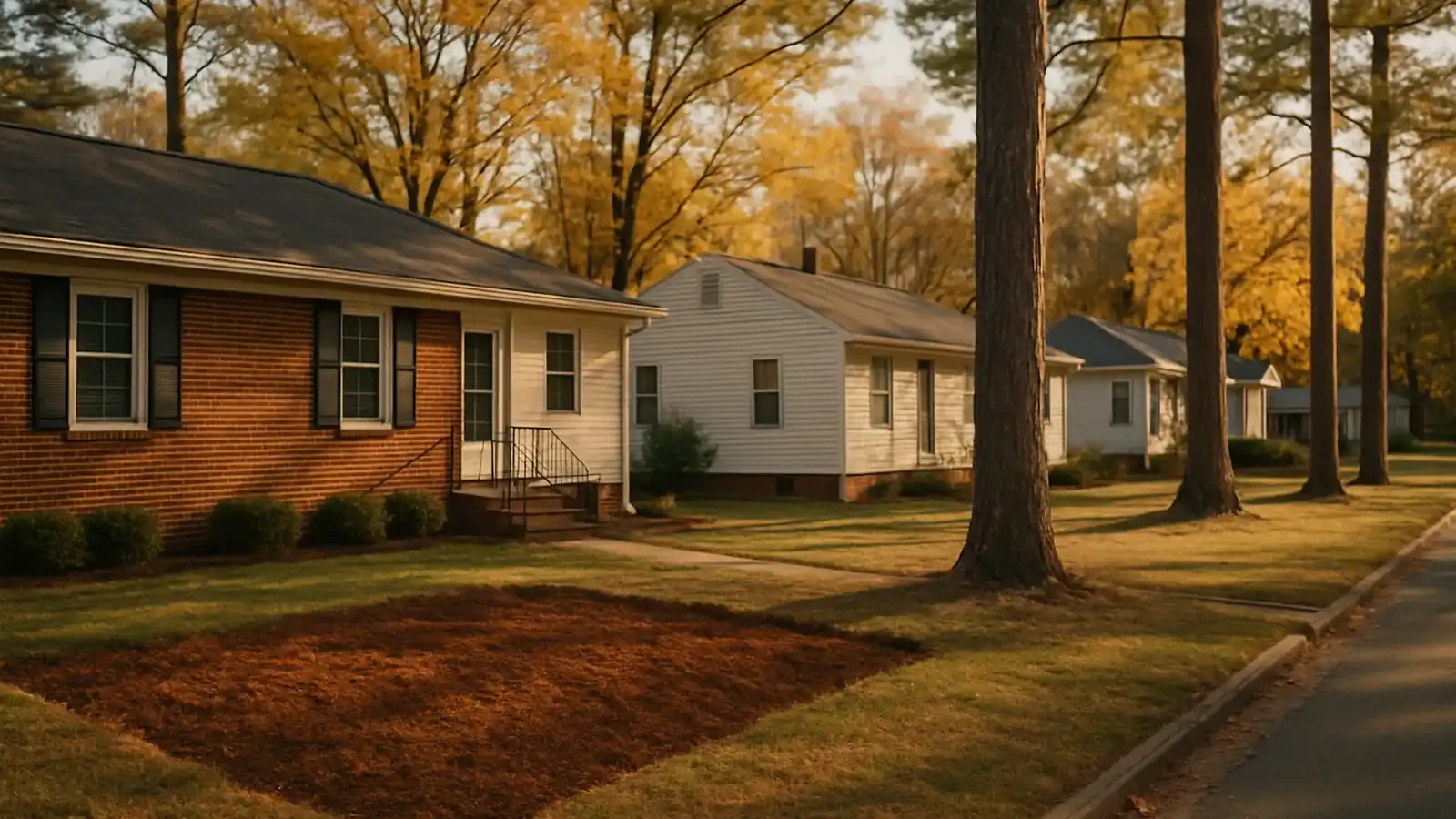
High Point grew around furniture manufacturing, and a large share of its older housing was built for the people who worked in those plants: modest, well-framed homes on crawl spaces, put up in groups to a small number of repeating plans.
That repetition is genuinely useful diagnostically. When houses on a street were built by the same hands in the same year to the same detail, they tend to share the same failure: bare clay under the crawl with no vapor barrier, an unsealed ceiling plane feeding the attic in winter, and a bath fan that vents into the attic or nowhere. Once one has been read, it shows what to look for in the rest, and neighbors comparing notes here are usually comparing the same problem.
Both seasons show up in this housing stock
Homes of this era are the clearest case for checking both ends. The crawl spaces were never detailed for summer condensation, and the ceilings were never air-sealed against winter condensation. Owners typically discover one and are surprised by the other. A good inspection covers the crawl space and the attic on the same visit for exactly that reason.
Showroom buildings and seasonal vacancy
Downtown High Point carries a large inventory of furniture showroom space that is fully used during market weeks and quiet for long stretches between them. Buildings that sit with reduced conditioning through humid months behave the way any underconditioned building does: humidity climbs and stays climbed, and porous furnishings and finishes absorb it.
For anyone managing that kind of space, the prevention is the same as it is for a house: keep mechanical dehumidification running through the humid season rather than letting the building coast, and check it periodically rather than discovering the result at the next setup.
Asked in High Point
Our whole street seems to have the same problem. Coincidence?
Usually not. Factory-era housing here was built in groups to a small number of repeating plans, so houses on a street share the same details, and the same weaknesses. Once one crawl space and attic has been read, the next one generally looks similar. It also means neighbors comparing notes are comparing the same problem.
What does mold removal cost in High Point?
The area ranges apply: $500 to $6,000 for most residential remediation, $2,000 to $6,000 for crawl space work, $1,500 to $5,000 for attic remediation. On this housing stock the answer is frequently a vapor barrier and ceiling air sealing rather than a full package.
Is older factory housing worth fixing?
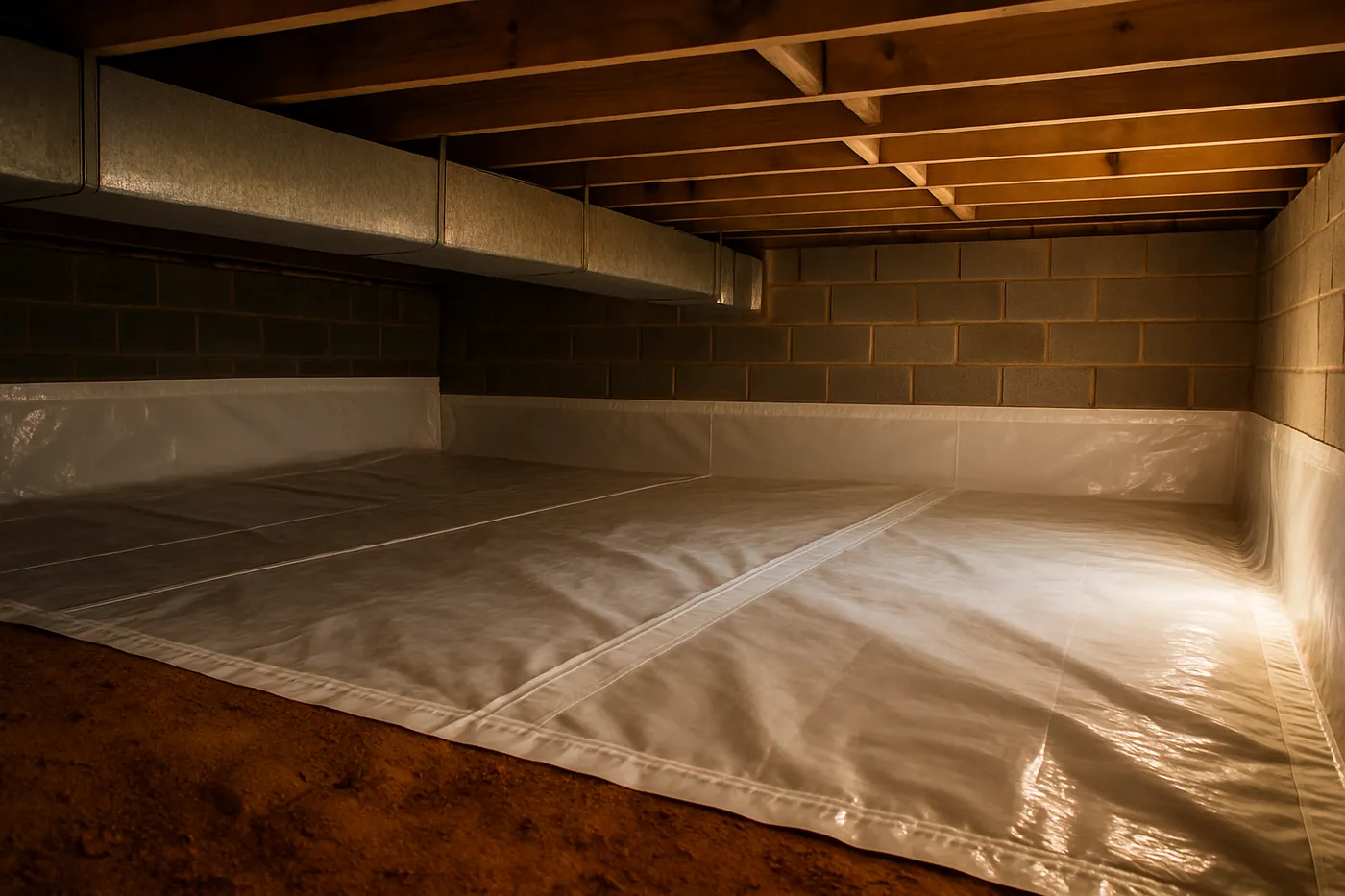
Almost always. The framing is typically sound and the material quality is often better than what replaced it. These are moisture-and-detailing problems, not build-quality problems. What they need is specific: a vapor barrier, air sealing at the ceiling, and drainage correction outside.
We manage showroom space that sits empty between markets. Any advice?
Keep mechanical dehumidification running through humid months rather than letting the building coast, and have someone check it periodically. An underconditioned building holds humidity the same way an empty house does, and porous furnishings and finishes absorb it, which you discover at the next setup rather than during.
High Point housing, decade by decade
The Census Bureau's 2020-2024 American Community Survey counts about 49,100 housing units in High Point, with a median year built of 1989. The 2000s are the largest single decade at about 22%, but about one home in five predates 1960, including roughly 8% from before 1940. That older slice is the factory-era housing described above, where crawl spaces and original framing have had the most decades to collect moisture.
Permits, flood maps, and yard drainage
High Point's permit office says permits must be obtained before the construction, repair or alteration of a residential structure, as state law prescribes. Under North Carolina's statute, repair work on a single-family home under $40,000 is generally exempt, but replacing load-bearing framing or changing wiring or HVAC is not, which is where serious crawl space rot or a new dehumidifier circuit lands.
The city takes part in the National Flood Insurance Program, and owners of property in a special flood hazard area are required to carry flood insurance. Off the floodplain, its drainage page says runoff on private property is the owner's responsibility to manage. USGS keeps a gauge on the East Fork Deep River near High Point, a public record of how fast local water rises after a storm.
Get a Greensboro mold inspection
Tell us what you’re seeing: a musty smell near the floor, dark streaks on attic sheathing, staining on a wall, water standing against the foundation, and we'll pass your request to one independent local specialist, who can set up an inspection. A local specialist who works in Greensboro will call you back.